There’s no ranking of states by number of signs, but if there were, I’d have to imagine New York would be near, if not at, the top. While I enjoy wacky and ghost business signs–many of which can be seen on my Instagram and will be shared here later–as well as strange and obscure works of art (and “art”), New York is an endless buffet of historical markers. Many states have captions for sites of renown or general interest, like these three:
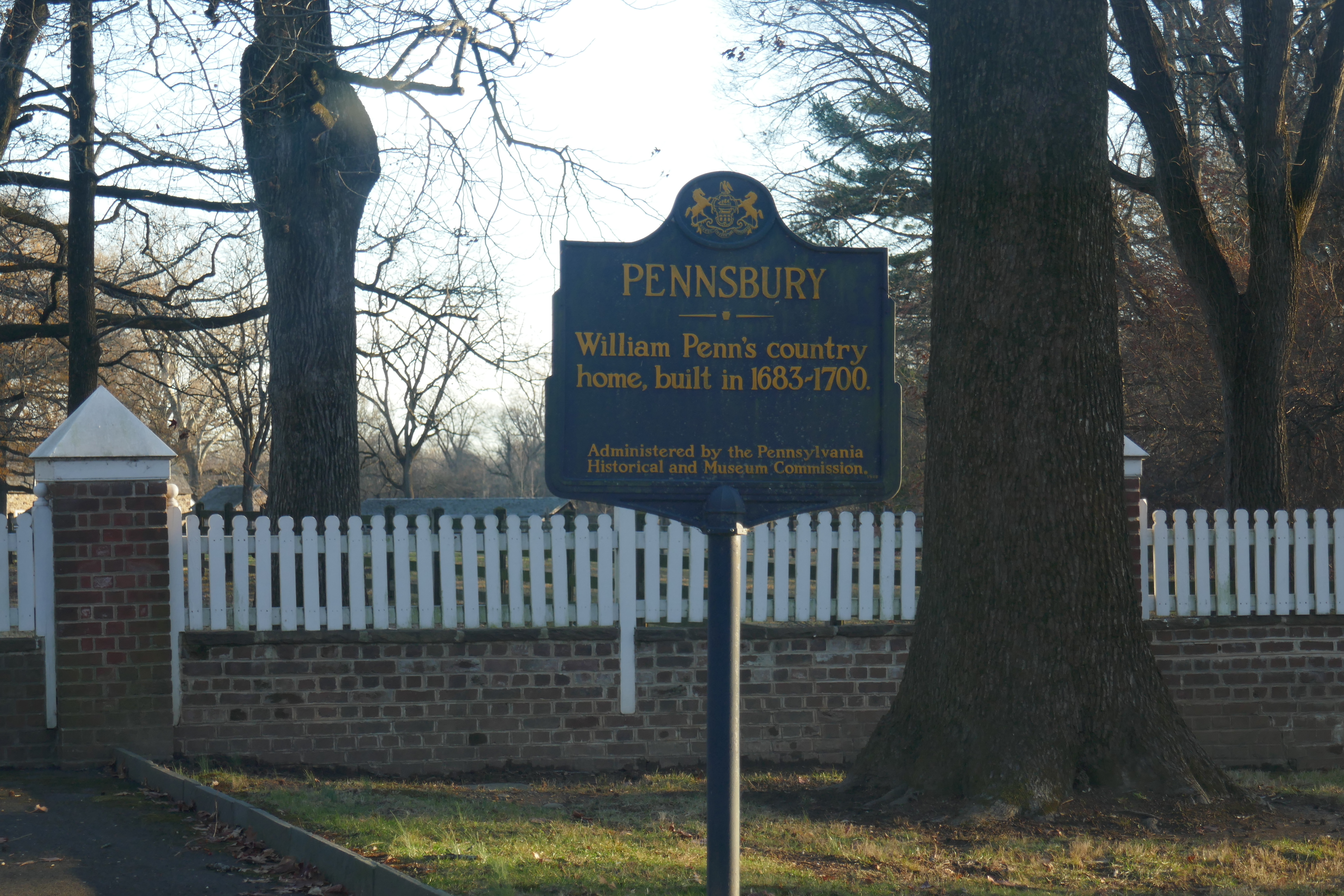
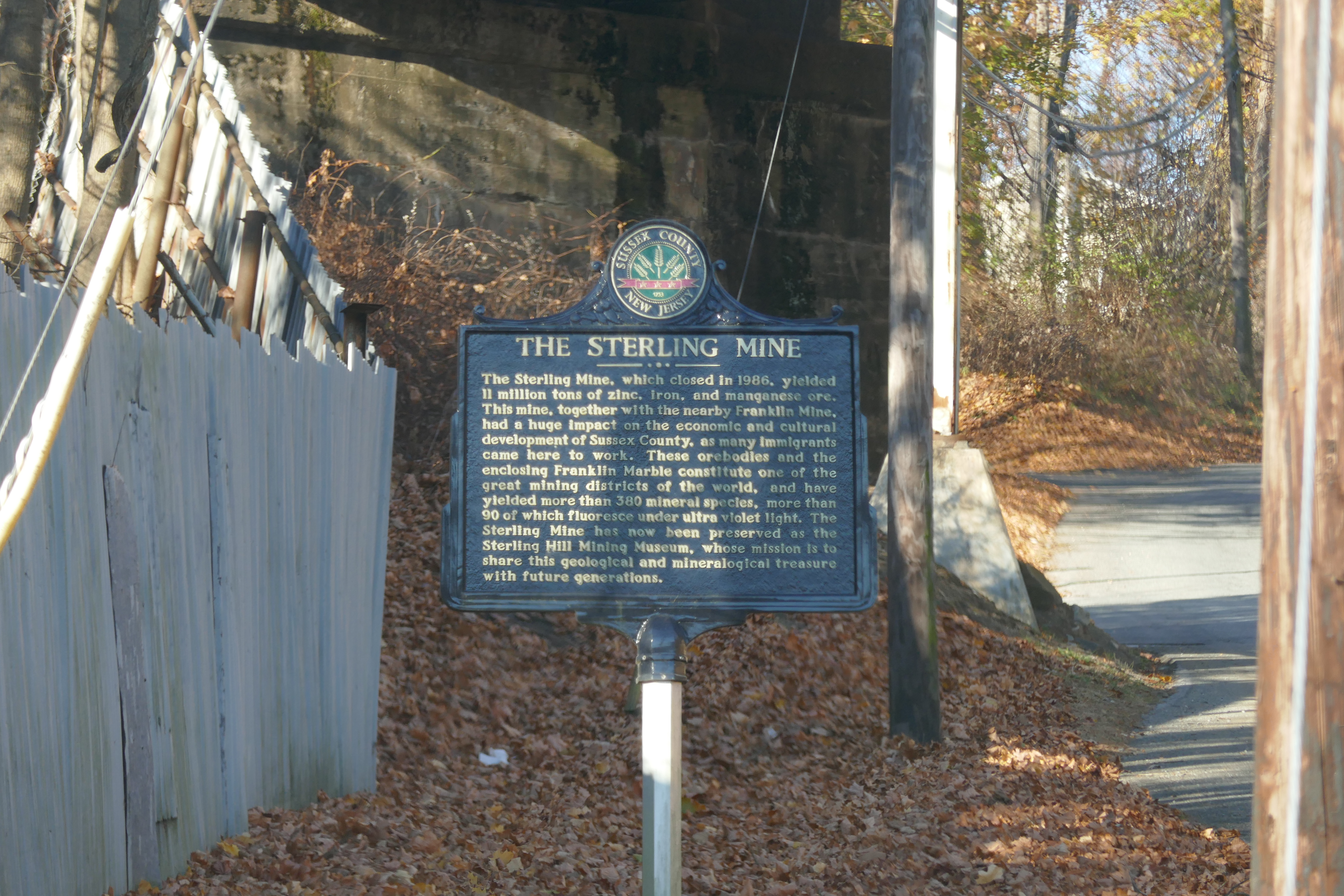

Sometimes these signs tell about local values, though other times it is the response to the signs that speaks–like the shooting and destruction of multiple markers regarding the lynching of Emmett Till, or the controversy about a marker commemorating a labor leader who was also a Communist Party member.
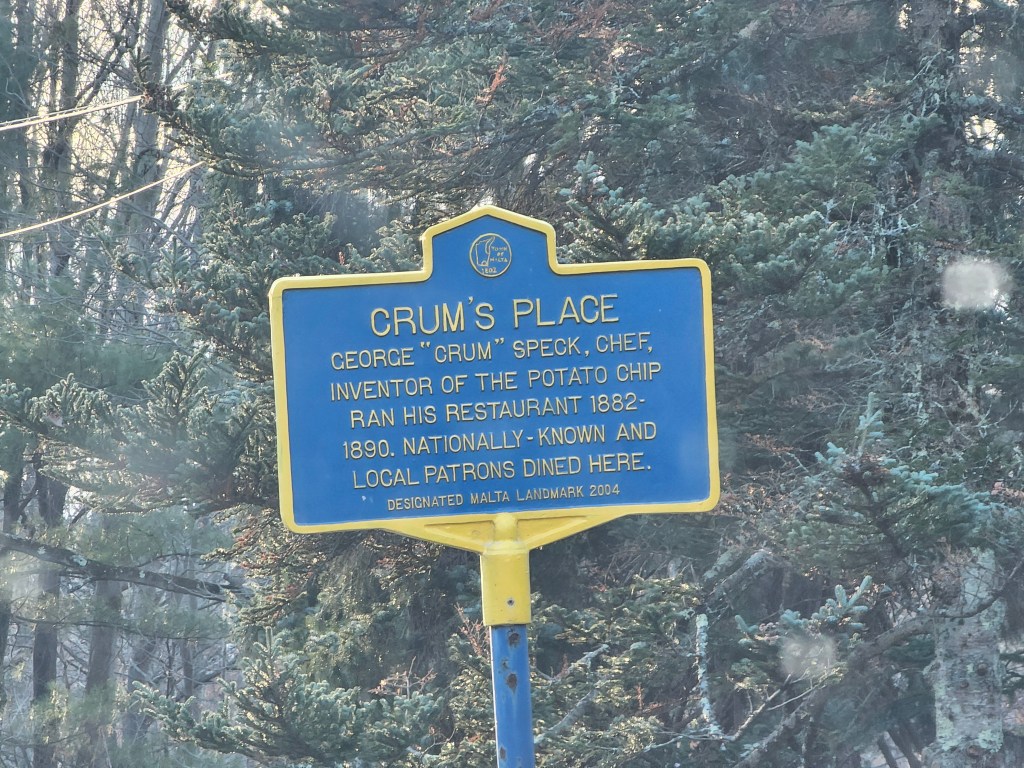
But New York really takes it to an absurd level, with examples that abound in not merely the history-making but the truly obscure, with signs outside the NYC area often denoting an otherwise long-forgotten settler or a building long since demolished. For every sign denoting a worthy contributor to society, such as George Crum’s perhaps apocryphal invention of the potato chip near Saratoga Springs, New York, there is a marker remembering obscure family farms that once existed.
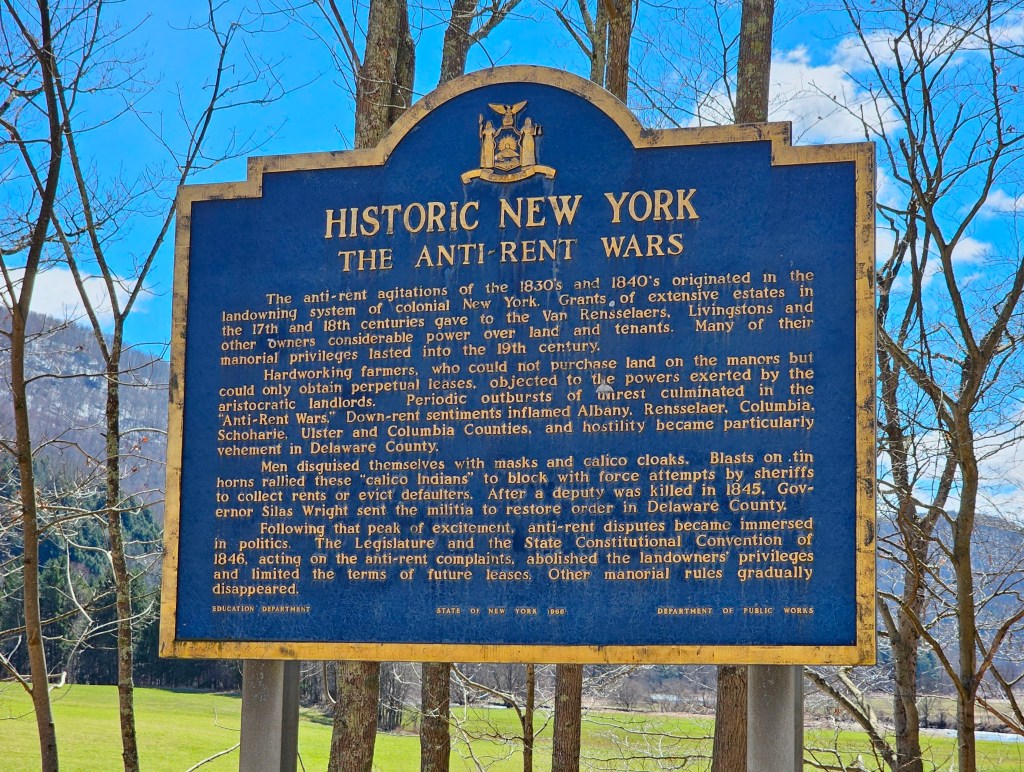
Within a few miles of our house in Schoharie County are multiple signs commemorating a long-forgotten “Sugar Bush Raid” between the Redcoats and American colonists, along with Native American allies. Many signs draw attention to otherwise mostly-forgotten events, even meaningful ones, like the Anti-Rent War, in which aggrieved tenant farmers in upstate-ish* New York took on their royal granted-landlords (patroons) in a small scale conflict which ended in the death of a sheriff deputy of the era (the death sentence for the convicts being commuted to a life sentence) as well as reforms for farmers.
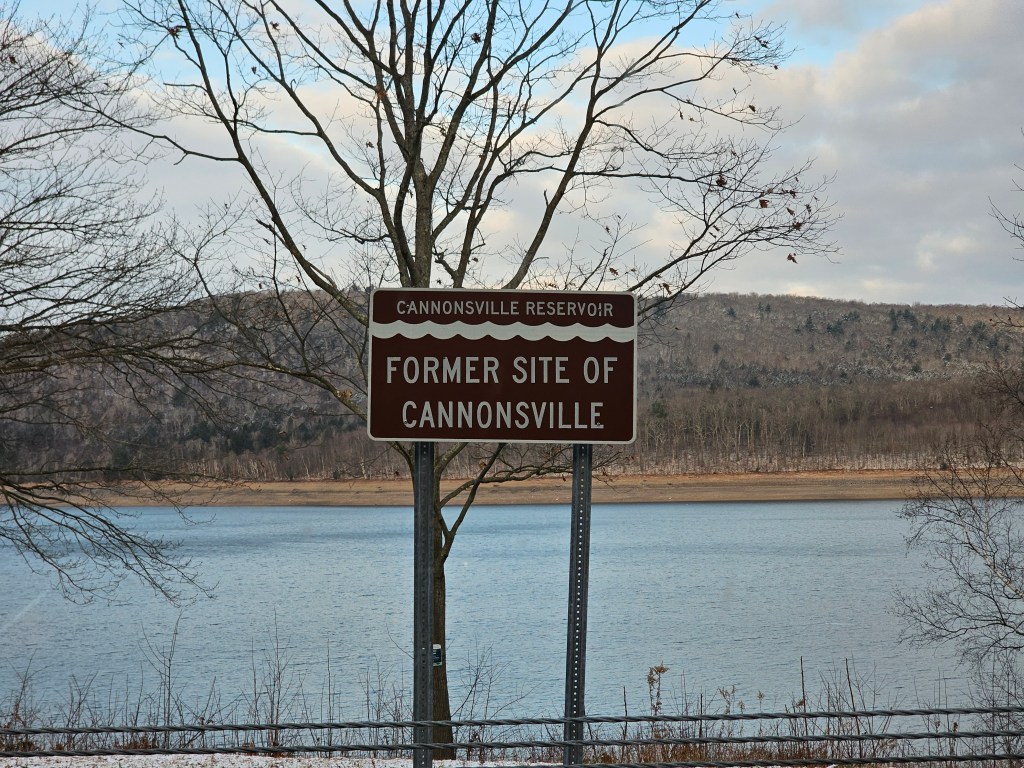
As well, a number in the Catskills areas recall villages destroyed for reservoir creation to quench the ever-growing thirst of New York City, or industries long past, such as wood acid production and timber rafting.
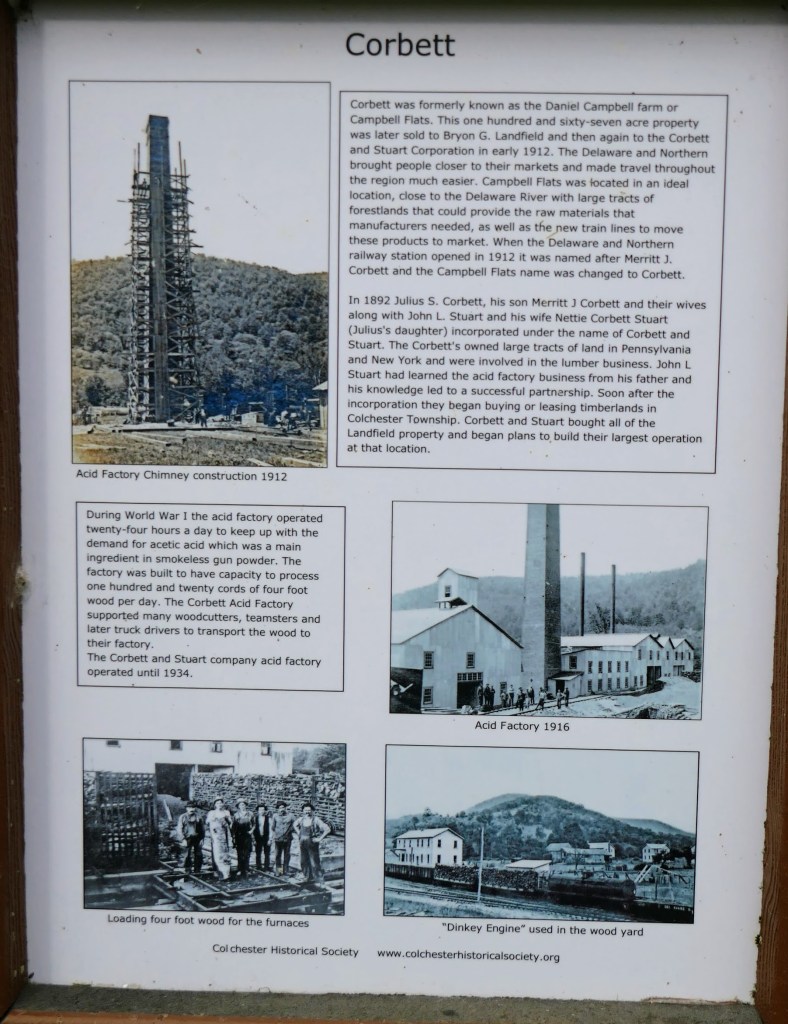
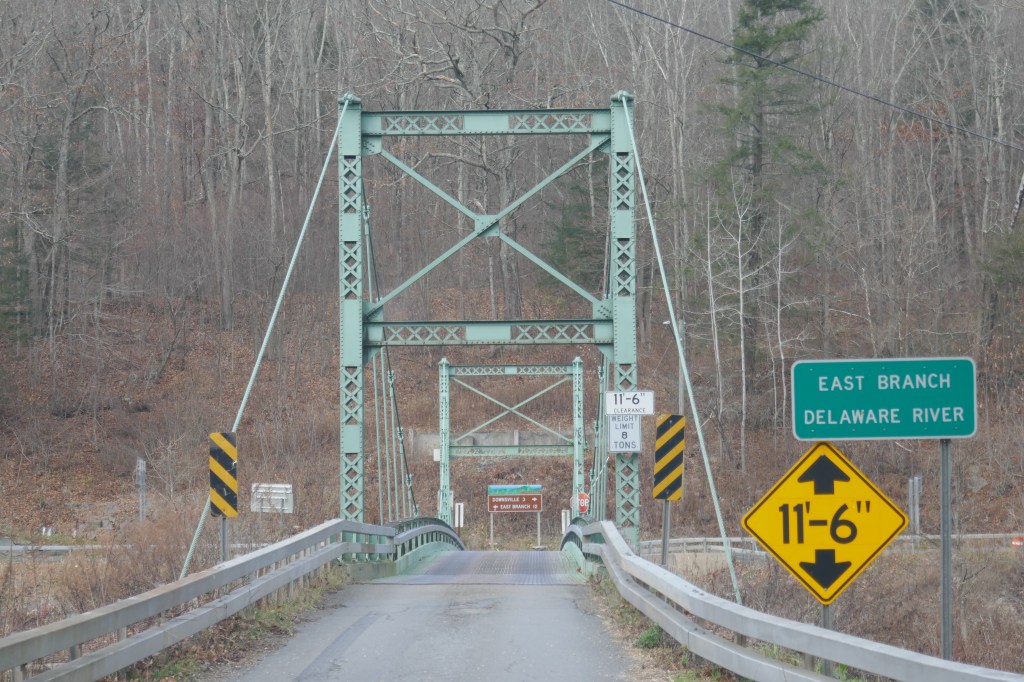
Often the signs are quaint, perhaps even a bit confusing: The signs here in Corbett, New York, are ambiguous as to whether the one lane suspension bridge is merely inspired by the Roebling Brooklyn Bridge design or the work of the Roebling Company itself; in consultation with the Roebling Museum in the eponymous town in New Jersey and the Delaware County Department of Public Works, I have confirmed that it was indeed built by the Roebling company.

Of course, there’s only so much information that can be conveyed in a sign–most signs endeavor to maximize information in as few words as possible, especially if they’re to be read by passing motorists–so not merely do we not get historical context in a lot of cases, we also don’t get differing historical perspectives. Many signs, particularly those from earlier eras, are at best dated, speaking in generalities about “Indian routes” and villages that used to exist, without context or explanation of where and why these settlements no longer exist (hint: the destruction and forced relocation of the native peoples). Some signs even seem to celebrate acts of hostility, as if this violence were self-justified.
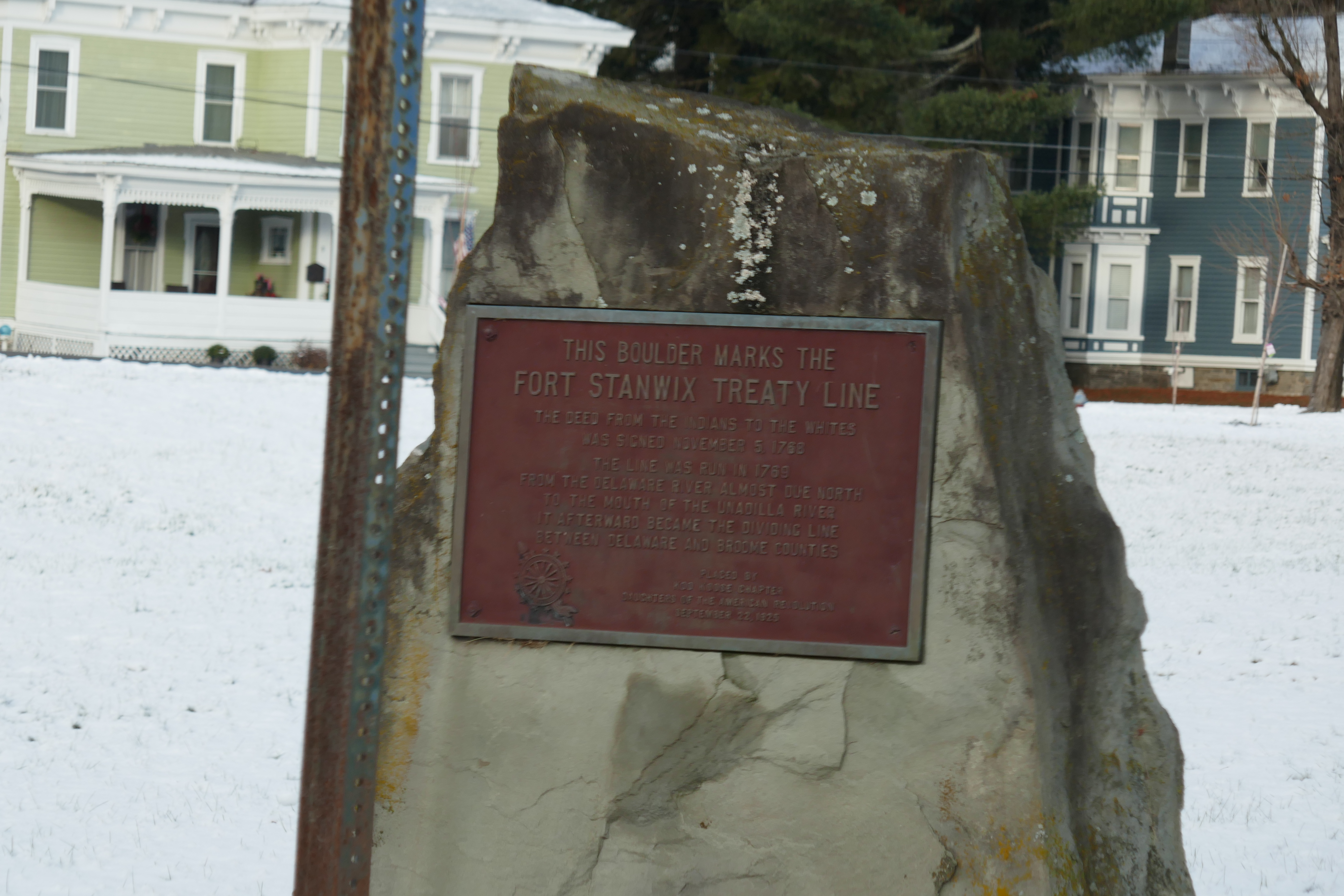
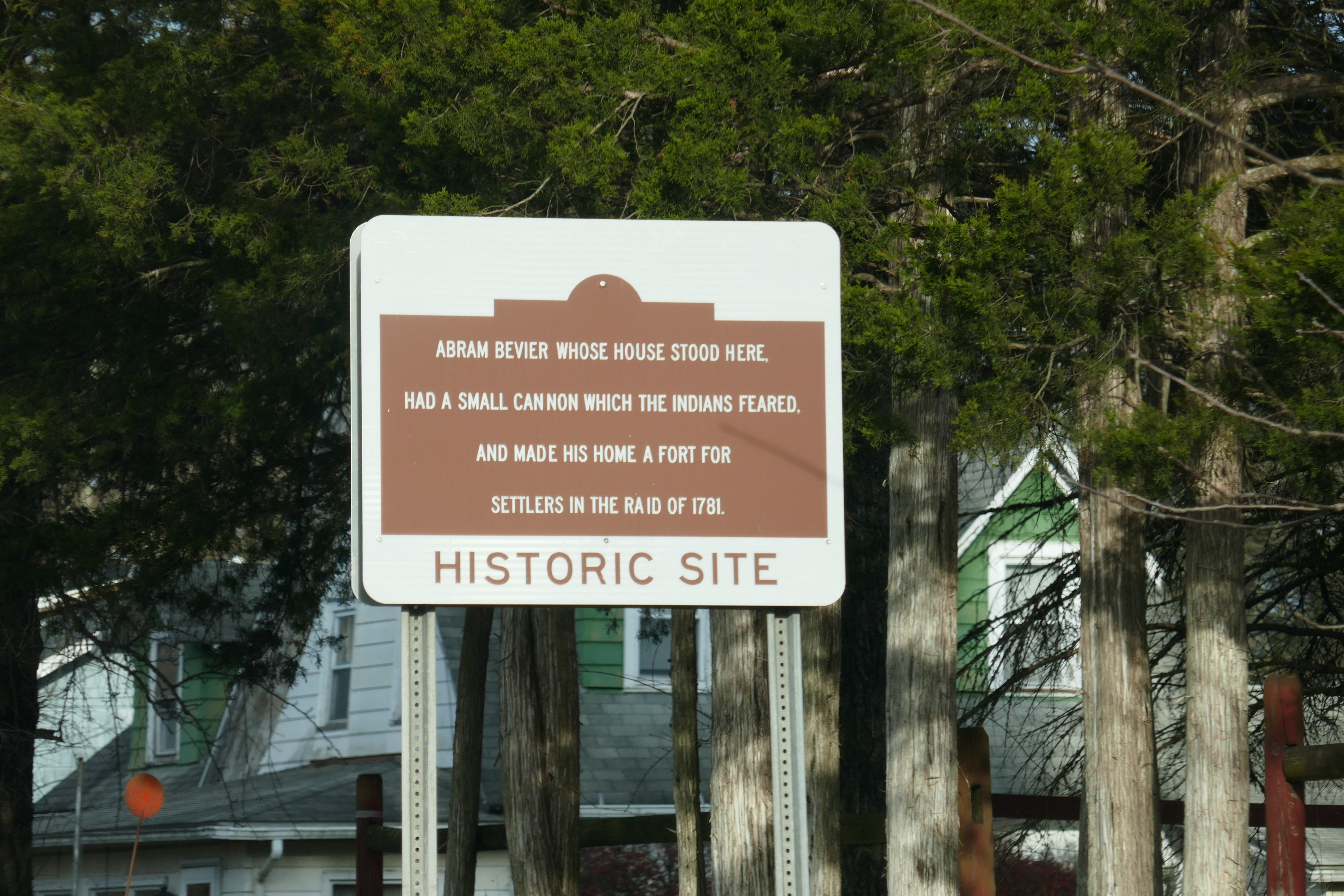
But even the ugly history that surrounds us needs to be remembered, though obviously in contextualized and historically-relevant ways that do incorporate more than the dominant perspective. Many of the signs which may have been intended to record Native American history, for example, speak of Native history as if it were a geological function of time or treat the indigenous people of the Americas as the eternal Other peered at across time in history books.
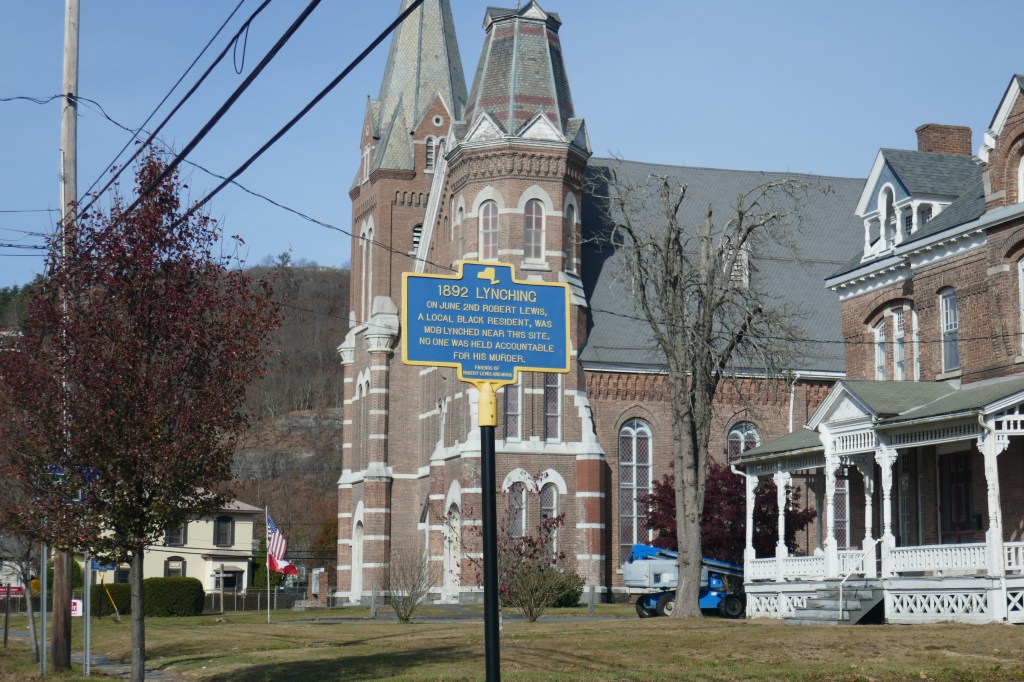
It does not have to be this way, however. Just as some of the historic houses my wife and I have visited have worked to include the stories of the slaves who labored there, the signs which point to our darker moments help us to not forget things some might prefer to. Robert Lewis, for example, was a Black man lynched in Port Jervis, New York, in 1892, in an echo of many of the uglier incidents most would mistakenly consider foreign to the North. Though the sign otherwise give further explanation (and a local group has been working to change that) it at least does not let us forget what happened in this place and that no measure of justice was accorded to the victim even after death.
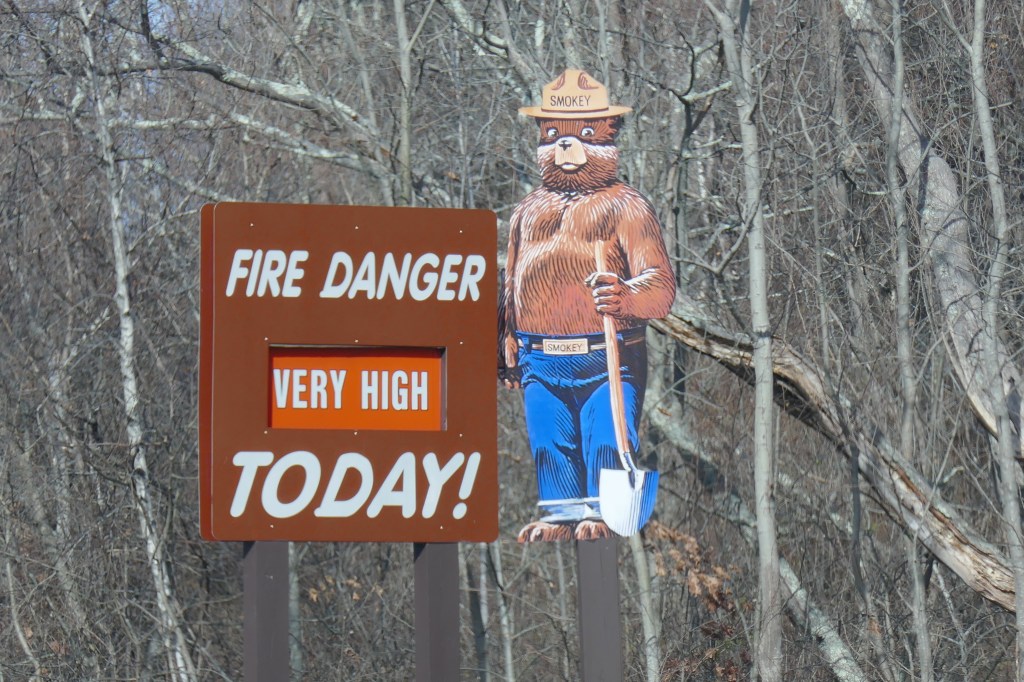
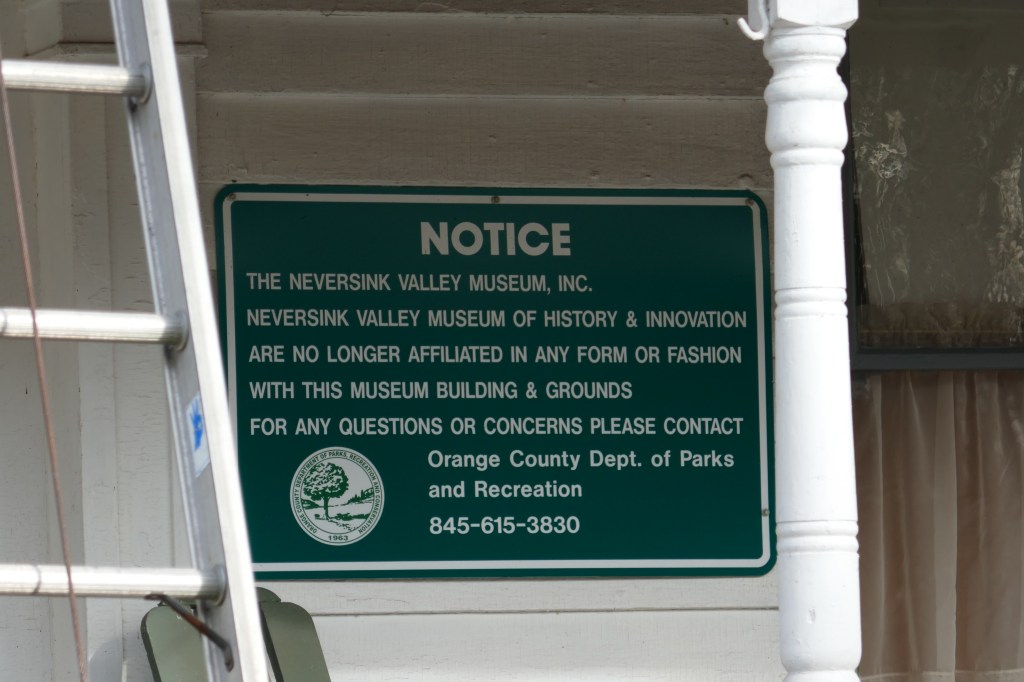
Public notices for the people, as seen in November 2024:
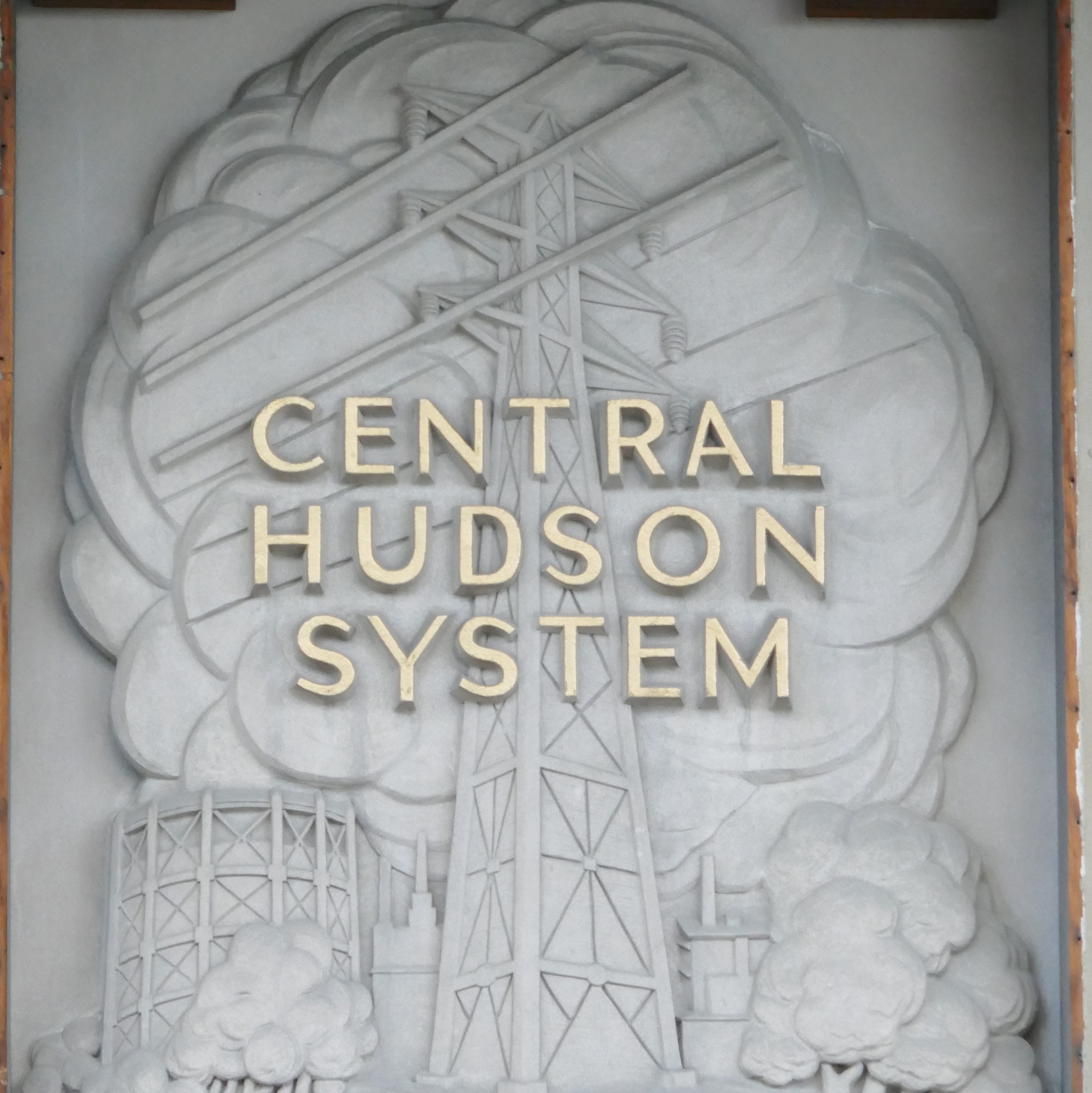
One more for today, as seen in Poughkeepsie, a time capsule from a different era:
* Having had years to cogitate on the matter, I believe upstate begins where the northern boundaries of the Catskills area are, basically a bit south of I-88 in New York (as opposed to I-88 in Illinois) and down NY-23 to the Thruway, such that places like Oneonta and Cobleskill are upstate, though barely.


 Just Driving Thru